
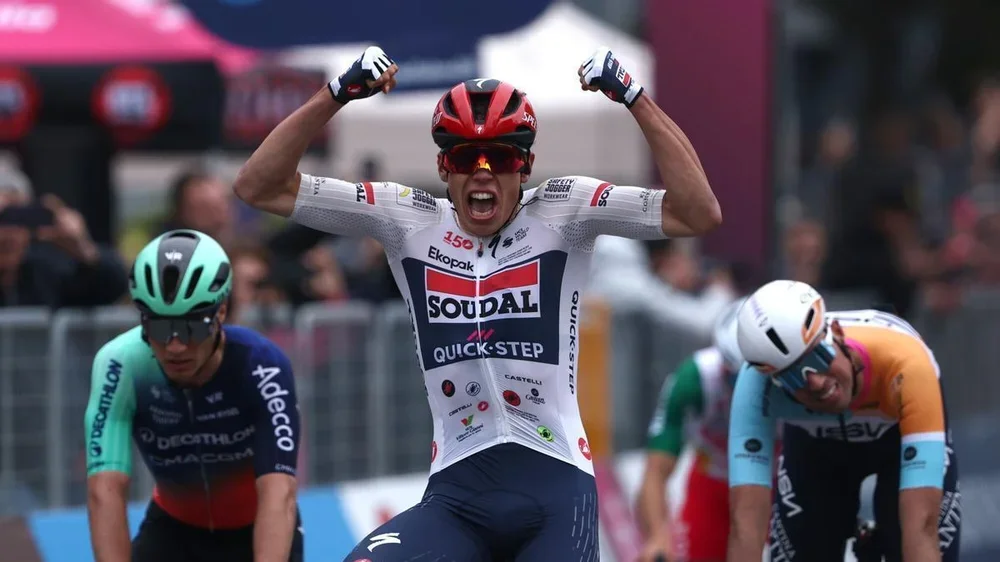
The 2026 Giro d’Italia kicked off in an unprecedented setting, rolling through Bulgarian roads for the first time in the race’s history. This marks another step in the trend of grand tours expanding beyond their traditional borders. While the opening stage was expected to end in a sprint, a massive crash at the finish line turned the outcome on its head.

Everything went according to plan until the final meters, with no major issues for the top contenders, including Jonas Vingegaard, who, as usual, hung back from the front of the peloton to stay clear of danger. The script called for a bunch sprint, and the stage delivered, but not the result Italian fans had hoped for. Their favorite, Jonathan Milan, was the natural pick for such a finish, carrying the added prize of the pink jersey as the first stage winner.
But a crash 600 meters from the line threw the race into chaos. The pack was forced to brake, leaving only a handful of sprinters to fight for the win. Among them was Frenchman Paul Magnier, who now leads the race and will wear the maglia rosa in Saturday’s second stage.
The stage, which started without incident, featured a breakaway by Spanish rider Diego Sevilla, who was kept on a short leash by the peloton. The riders treated the day as a training run before the real battles begin. If not for the massive pile-up, Magnier’s win would have been a straightforward affair for Soudal–Quick-Step, a team more desperate for victories this season than in previous years, especially without Mikel Landa, who was set to lead the squad at the Giro but is sidelined with a small fracture from a crash at Itzulia. He is expected to return for the Tour de France.
The race will remain in Bulgaria for the weekend before moving to Italy on Monday for Tuesday’s continuation. The route will only leave Italy for a single stage in the Swiss Alps. The early start date was necessary to accommodate the long transfer from Bulgaria to Italy, a departure from the traditional Saturday start. This year, both the Tour de France and Vuelta a España have also eliminated rest days for cross-country transfers. The Tour will switch to an entirely French route after crossing the border at Puigcerdà, while the Vuelta will feature a more international route through Monaco, France, and Andorra before settling into its southern Spanish heartland, primarily in Andalusia.