
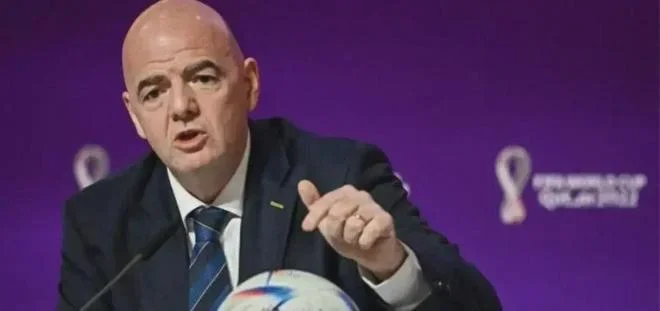
With the 2026 World Cup in the United States, Canada, and Mexico just a month away, negotiations between China Central Television and FIFA over broadcast rights remain deadlocked.
An unconfirmed report claims a FIFA official warned that if China does not accept the broadcast fee, it could face a permanent ban from broadcasting the World Cup and even from participating in the tournament. While FIFA appears anxious, some analysts see this as a positive sign—China should not be treated as a cash cow and should instead invest its resources where they are truly needed.
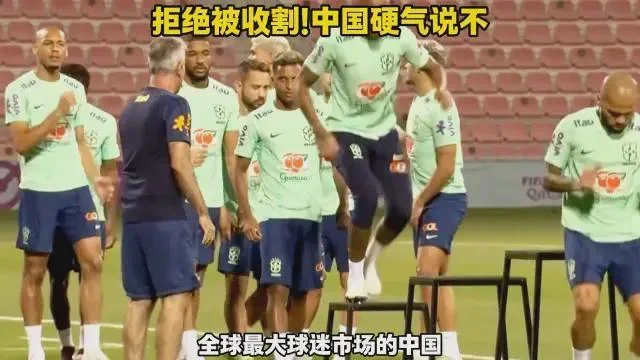
FIFA initially demanded a staggering $250-300 million for the single-tournament broadcast rights in China, equivalent to nearly 2 billion RMB. CCTV’s budget, however, is only around $60-80 million—a fourfold gap that critics describe as predatory pricing. Surprisingly, China refused to budge. FIFA then slashed its offer step by step: from $300 million to $140 million, then $120 million, and finally $105 million. CCTV’s counteroffer remained firm: $62 million, no more.
What frustrates Chinese fans even more is FIFA’s blatant double standard. For India, another populous nation, FIFA offered a two-tournament packaged fee of just $35 million—roughly $17.5 million per tournament. That means China’s initial offer was 17 times higher than India’s per-tournament fee. The question is: why should China be treated as a VIP sucker?
This year’s expanded World Cup—featuring 48 teams, 104 matches (up from 64), and a 39-day schedule—has diluted the tournament’s quality, turning it into a “watered-down” event. FIFA clearly hopes to exploit the expansion to hike prices. Moreover, over 70% of matches will air in China between 2 a.m. and 10 a.m. Beijing time, severely limiting prime-time advertising appeal. With the Chinese men’s national team absent from the World Cup for six consecutive editions, there’s no home team to rally behind.
Spending hundreds of millions of dollars to broadcast a tournament without China’s own team is not only financially dubious but also an affront to national pride. Instead, that money could be channeled into grassroots football. The “Village Super League” (Cun Chao) has exploded in popularity: from 20 participating village teams in 2023 to 137 in 2026—a sevenfold increase—and its online viewership regularly tops 100 million. This is authentic, grassroots Chinese football.
Earlier in the World Cup qualifiers, CCTV took a similar hard line with the AFC’s broadcast agent, refusing to pay exorbitant fees and even suspending coverage of China’s matches. That precedent has emboldened China’s stance. FIFA is now sending executives to Beijing to negotiate, fully aware that losing access to China’s massive audience of nearly 300 million football fans would cost them far more than the broadcast fees.
At its core, China’s bargaining effort is not just about saving billions—it’s a battle for respect and fair pricing in the global football market. Investing in local fields for children and striving for a stronger national team would be a far better use of funds than overpaying for a diluted tournament broadcast.
In short, China refuses to be FIFA’s scapegoat. The message is clear: no more double standards, no more inflated fees—just a firm commitment to protecting its own interests and football future.